Jsaux Steam Machine Eink Faceplates Launch Hardware Analysis [2026 Update]
JSAUX releases prebuilt E-Ink and Pixel Matrix faceplate displays for Steam Machines. Analyze the competitive hardware impact and 217G market...
The Story
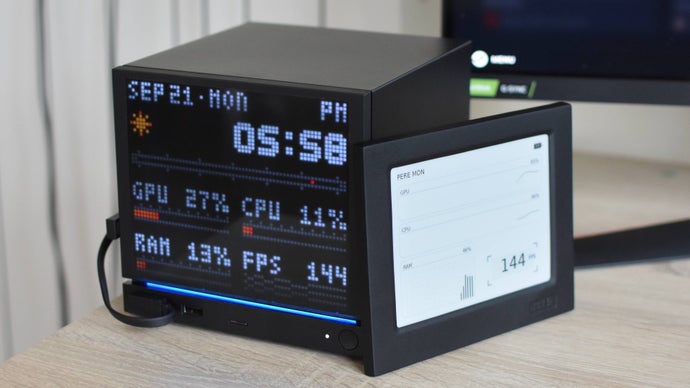
As originally reported by Rock Paper Shotgun, third-party accessory manufacturer JSAUX has officially released commercial prebuilt faceplate screens designed specifically for Valve Steam Machine chassis. The newly introduced accessories offer PC gaming enthusiasts and competitive players two distinct options for front-panel telemetry and visual customization: a high-contrast black-and-white E-Ink display and a colorful low-density Pixel Matrix panel. Previously, hardware customizers seeking chassis status displays had to rely on Valve's open-source Inkterface initiative, requiring self-procured parts, manual soldering, and custom 3D printing. By commercializing fully assembled plug-and-play faceplates, JSAUX significantly lowers the technical barrier and financial cost of dedicated hardware monitoring panels. This hardware innovation comes during a period of broader industry reshuffling across major gaming platforms, similar to structural pivots seen when and studios re-evaluate product hardware ecosystems. Both JSAUX faceplate models connect directly to internal chassis headers, providing continuous real-time diagnostic telemetry, customized team branding, and dynamic performance feedback without demanding complex user modifications or expensive bespoke boutique modifications.
Strategic & Competitive Analysis
How this development impacts competitive gameplay, professional metas, and community markets.
From a competitive esports standpoint, offloading system health telemetry to dedicated exterior hardware solves a persistent issue for professional players and academy rosters during high-stakes qualifier matches. Traditional software overlays often introduce minor micro-stuttering, GPU driver overhead, or background CPU thread polling, which can degrade frame time consistency during intense execution rounds on processor-heavy CS2 maps like Inferno and Nuke. By utilizing JSAUX E-Ink faceplates for zero-overhead hardware monitoring, esports bootcamps can track thermals, frame latency, and system stability at a glance without compromising frame-pacing or cluttering primary high-refresh monitors. Similar technical optimization drives performance shifts across competitive gaming ecosystems, where specialized hardware setups refine player execution in major circuit qualifiers. Teams maintaining pristine system stability gain an edge during long tournament endurance sets where thermal throttling can subtly degrade aim precision and reaction timing.