USDT • Binance Pay • Pakistan • Updated November 2026
How to Buy a PUBG Mobile Account with USDT in Pakistan — Binance Pay, P2P & Escrow (November 2026)
# How to Buy a PUBG Mobile Account with USDT in Pakistan — Binance Pay, P2P & Escrow (November 2026)
Direct answer: Yes, you can buy a PUBG Mobile account with USDT in Pakistan — 217G accepts Binance Pay USDT, and its crypto checkout runs on NOWPayments. USDT is the payment method of choice for overseas Pakistani buyers and for anyone whose bank will not touch a gaming-account deal. But USDT has one property that changes everything about how you must buy: it cannot be reversed. A JazzCash or bank payment can sometimes be frozen or disputed; a USDT transfer, once confirmed, is gone. That is why the only safe way to pay in USDT is through escrow — the marketplace holds your USDT until you have the account, checked it live, and confirmed it. Never send USDT directly to a seller. This guide covers the three ways to pay, the exact price math, the Pakistan legal position as of November 2026, and the USDT-specific scams that catch buyers every week.
Why buyers pay in USDT — and why it raises the stakes
USDT (Tether) is a US-dollar stablecoin: 1 USDT is designed to stay worth about $1. Pakistani buyers use it for a PUBG account for four practical reasons:
- Overseas buyers. A buyer in Dubai, Riyadh or London cannot easily send JazzCash. USDT moves across borders inside minutes, and 217G's Gulf price guides all list USDT as a payment option.
- No bank in the middle. Some Pakistani banks still flag gaming and crypto-linked transfers. Paying in USDT keeps the deal off the bank rails entirely.
- A stable price. Unlike Bitcoin, USDT does not swing 10% while you negotiate. The rupee figure you agree is the USDT figure you send.
- Speed. A Binance Pay transfer between two Binance users settles in seconds, not the hours a bank transfer can take.
The trade-off is finality. Crypto transfers are irreversible by design. If you send USDT to a scammer, there is no bank to call, no chargeback, and no freeze — the money is gone the moment the network confirms it. Binance itself states this in its P2P terms: all payments are final upon completion, and the platform is not obliged to resolve disputes arising from a completed payment. That single fact is the whole argument for escrow: with USDT, the protection has to exist before you pay, because there is no protection after.
The three ways to pay in USDT — and which one to use
There are three distinct ways USDT changes hands. They are not interchangeable, and picking the wrong one is how buyers lose money.
Binance Pay — use this whenever both sides have Binance. Binance Pay moves USDT between two Binance accounts inside Binance's own system, using the recipient's UID, email, phone number or QR code. It is not a blockchain transaction: there is no wallet address to copy, no network to pick, and no on-chain fee — transfers between regular users are usually instant and usually free. This is the method 217G accepts for USDT deals, and it is the method to ask for. One warning: Binance Pay transfers cannot be reversed once sent, so you still send only to the official escrow account, confirmed on a live call — never to a UID pasted in a chat message.
On-chain wallet transfer (TRC20 / BEP20 / ERC20) — use only if the escrow desk gives you an address. Here you withdraw USDT from your wallet or exchange to a wallet address on a specific blockchain network. The two rules that matter: the network you send on must exactly match the network the address belongs to , and the fee and confirmation time depend on the network. Send TRC20 USDT to an ERC20 address and the funds can be lost permanently — there is no undo. If you pay this way, get the address and the network from the escrow desk on the live WhatsApp call, copy-paste it (never retype it), check the first and last characters, and confirm the fee shown before you tap send. Never let a seller dictate the network or hand you an address in a DM.
Binance P2P — how you get USDT with rupees in the first place. Most Pakistani buyers do not hold USDT already; they buy it. On Binance P2P you buy USDT from another user with JazzCash, Easypaisa or bank transfer, and Binance locks the seller's USDT in escrow the moment the order is created. The safety rules, from Binance's own guidance, are simple and absolute: release of crypto happens only after the seller confirms the payment has actually arrived in their own bank or wallet app — never because of a screenshot, an SMS or a chat message; you must pay from an account in your own verified name, because third-party payments are forbidden and can get the trade frozen or the funds reclaimed; and if anything does not match, do not release and do not cancel — open an Appeal. The same rules protect you when you are the buyer: pay only to the account shown in the order, only from your own account, and tap "Transferred, Notify Seller" only after the money has actually left your account. Trades arranged outside Binance's chat are not covered if you lose money.
| Method | Speed | Fee | Network risk | Best for |
|---|---|---|---|---|
| Binance Pay (217G escrow) | Seconds | Usually none | None — internal transfer | Every 217G USDT deal |
| On-chain transfer (TRC20/BEP20/ERC20) | Minutes, varies by network | Withdrawal fee, varies | High — wrong network can lose funds | Only when the escrow desk gives you an address + network |
| Binance P2P (buying USDT with PKR) | Minutes per trade | Spread in the P2P rate | None on the crypto side; bank-payment risk | Getting USDT before the deal |
The price math — Rs 275 per USDT, and how to check it
217G prices USDT deals at Rs 275 per USDT (the handover pricing convention, stated 16 November 2026). The conversion is simple division: USDT = PKR price ÷ 275. Worked examples at that rate:
- A Rs 27,500 account = 100 USDT
- A Rs 55,000 account = 200 USDT
- A Rs 137,500 account = 500 USDT
- The median live listing (Rs 68,500 on 19 November 2026) = about 249 USDT
Two things to check before you send. First, confirm the USDT figure in writing with the escrow desk before you pay — the rupee price is the deal, the USDT figure is just the conversion, and the desk confirms the exact amount so there is no argument after the transfer. Second, remember the rate is a convention, not a market price: if you buy your USDT on P2P, the P2P rate you actually pay includes the seller's spread, so the rupees you spend getting USDT will be slightly more than the Rs 275 conversion suggests. That spread is the cost of the P2P step, not part of the account price — budget for it separately. Never accept a seller's "special USDT rate" that is far from Rs 275 in either direction: a rate far below it means the seller is pricing in a scam, and a rate far above it means you are overpaying.
Step by step: buying through 217G escrow with USDT
- Pick the account from the live catalogue. 149 PUBG accounts were available on 217G on 19 November 2026, from Rs 5,000 to Rs 6,468,000. Choose from a live listing, not a screenshot in a group — a screenshot can be an account that sold weeks ago.
- Agree the rupee price and confirm the USDT figure in writing. Message the 217G helpline (+92 344 3292360) and get the USDT amount confirmed against the Rs 275 convention before you move any crypto.
- Send USDT only to the official 217G escrow account. Use Binance Pay to the UID or QR code the escrow desk shows you on the live call — not a UID from a chat message, not a wallet address a "seller" sends you, and never a Telegram middleman. Catalogue purchases carry 0% buyer commission; confirm any fee in writing before paying if your deal is a private third-party arrangement rather than a catalogue purchase.
- Join the live video transfer. The escrow admin runs a live WhatsApp video call: the seller logs in on camera, the admin observes the single login, and you change the password and 2FA email while the admin watches. The whole transfer typically takes 30 to 60 minutes.
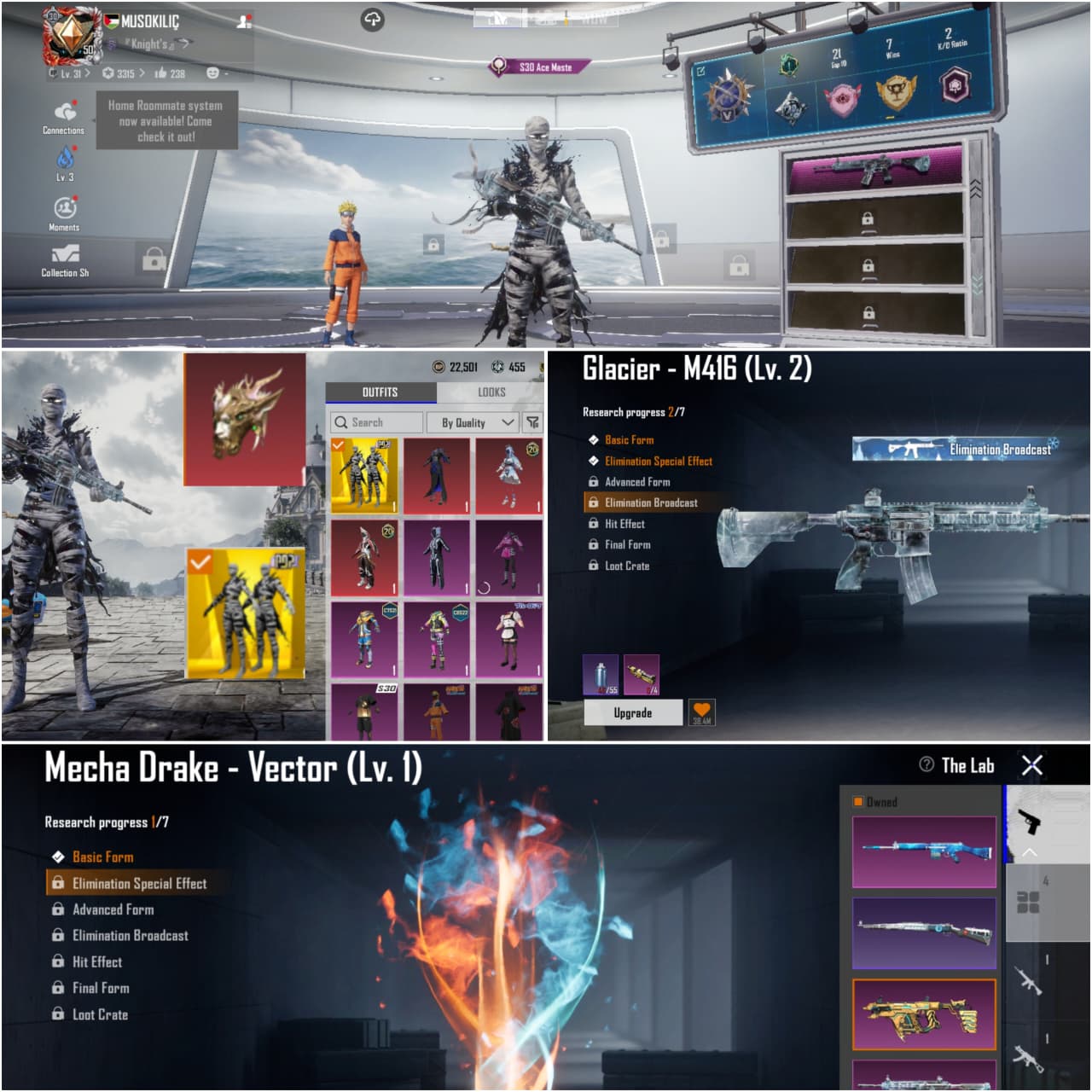
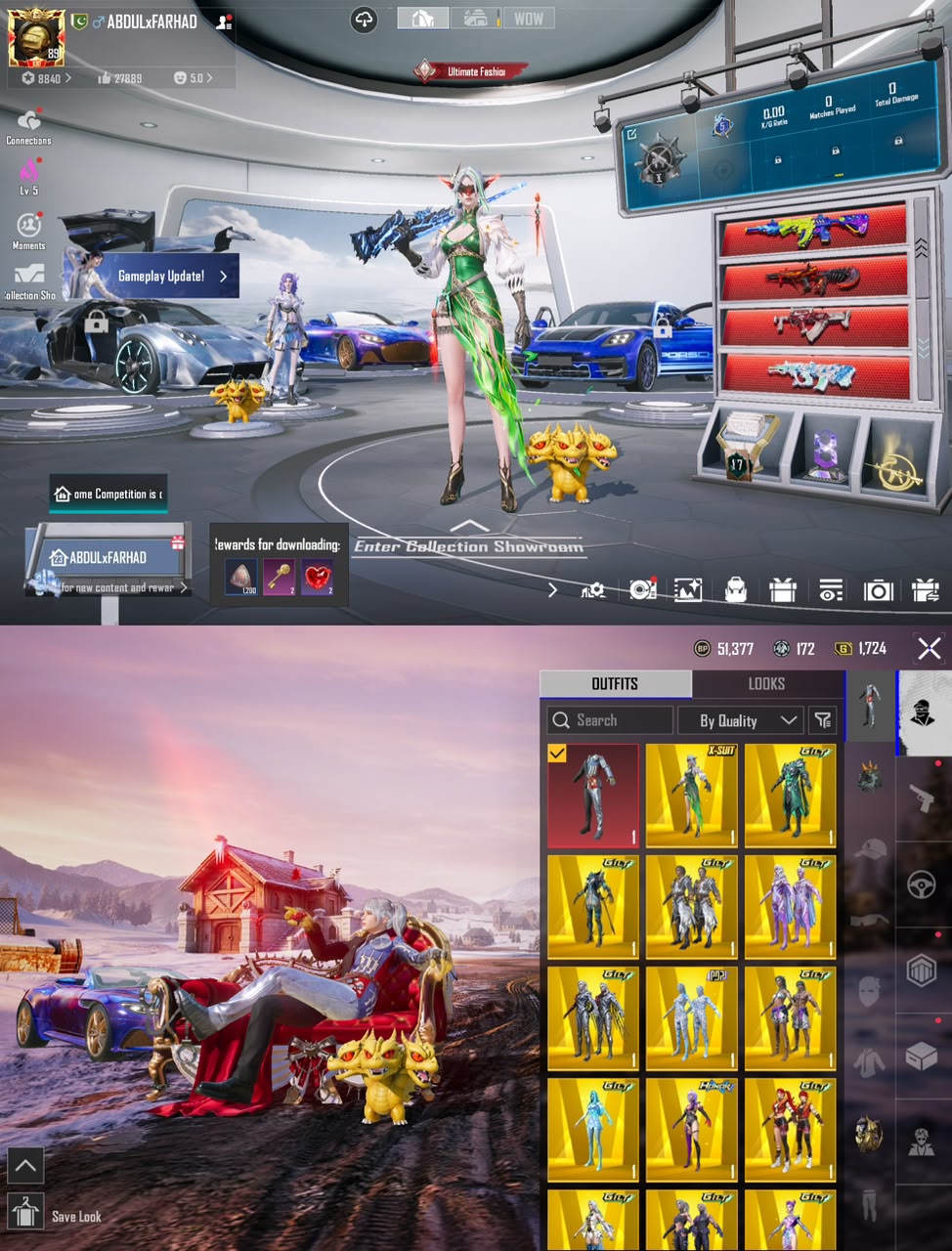
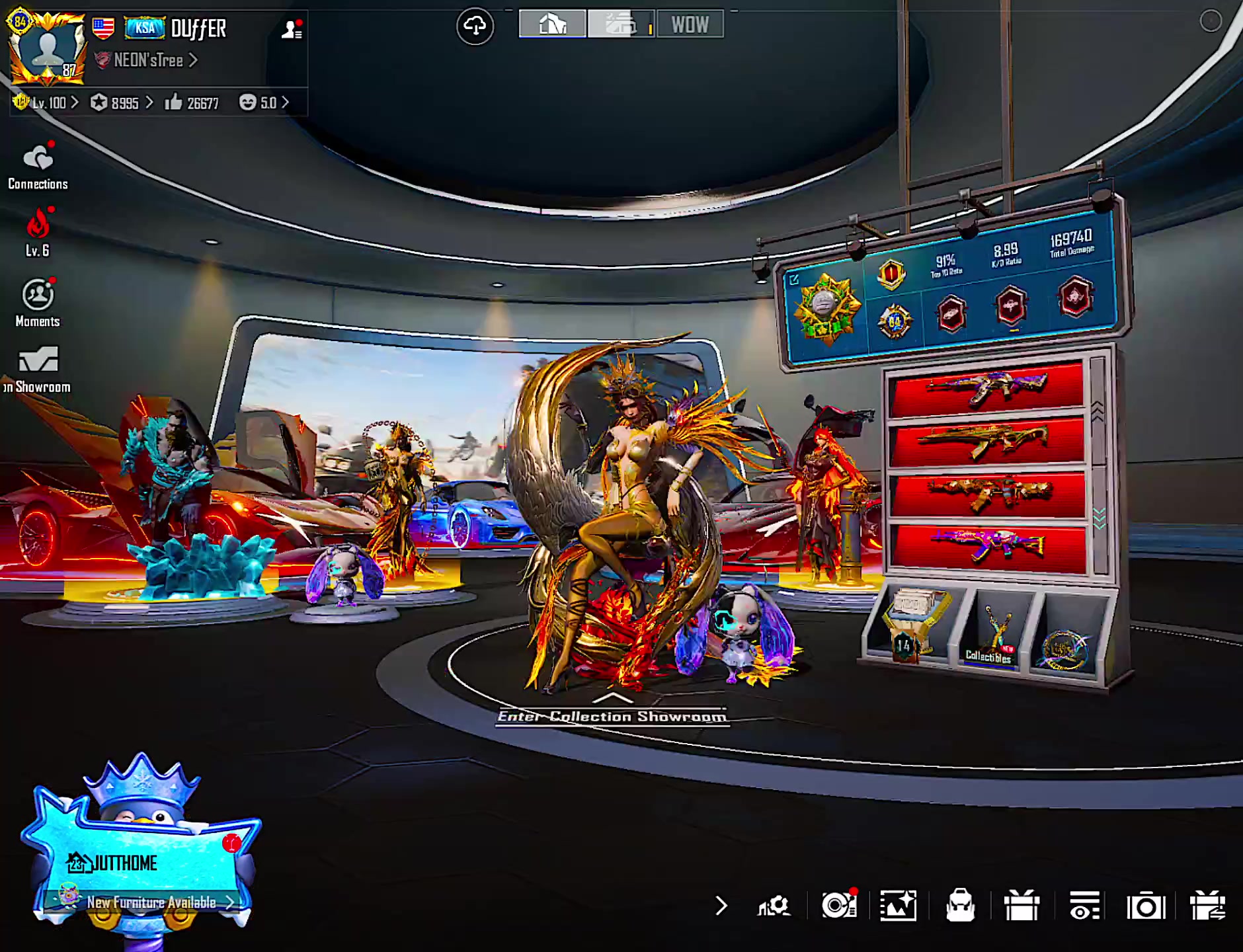
- Log in and verify everything yourself. Check the inventory, X-Suit levels, Gun Labs, Mythics and collection score against the listing, on your own device, before you confirm anything.
- Wait out the 168-hour hold. Unlinking an email, phone or social login enforces Krafton's mandatory 7-day (168-hour) cooldown, and during that week the seller's trusted device can cancel the unlink with one tap. 217G holds the seller's payout until the full 168 hours elapse cleanly — this is what stops the recall scam, and it is the reason you never agree to release payment on day one of the countdown.
- Confirm only when it is all yours. Once the cooldown has passed, the logins are yours and the inventory matches, confirm delivery and the escrow releases the USDT to the seller. If anything does not match, the funds stay held and the deal is unwound.
The Pakistan legal position, November 2026 — what changed this year
This section is general information, not legal or financial advice. The position changed materially in 2026, and older guides that quote the 2018 circular as the current law are out of date.
- Crypto is not legal tender in Pakistan. That has not changed. The Virtual Assets Act 2026 states that virtual assets are not legal tender and cannot replace the rupee.
- Owning and trading crypto as an individual is not an offence. The Virtual Assets Act 2026 (Act No. XIII of 2026) — passed by the Senate on 27 February 2026 and the National Assembly on 3 March 2026, assent 4 March, published 5 March 2026 — made the Pakistan Virtual Assets Regulatory Authority (PVARA) permanent. The Act puts the licensing obligation on the business , not on you: offering virtual-asset services without a PVARA licence carries up to five years' imprisonment and a fine of up to Rs 50 million. PVARA notified its licensing regulations on 21 August 2026, but as of October–November 2026 no exchange holds a full PVARA licence; Binance holds a PVARA no-objection certificate, not a full licence.
- The old banking ban is gone. The State Bank's BPRD Circular No. 03 of 2018 told banks and payment firms not to deal in virtual currencies. On 14 April 2026 the State Bank replaced it with BPRD Circular Letter No. 10 of 2026, which lets banks open rupee accounts for PVARA-licensed providers. Banks still may not trade or hold crypto with their own money or customer deposits. The State Bank had already clarified on 30 May 2025 that it never declared crypto illegal — the 2018 circular bound the banks, not individuals.
- The history still matters. Between 2018 and 2024, Pakistani authorities froze more than 11,000 bank accounts linked to crypto transactions, and the FIA froze 1,064 accounts in 2021 alone. That enforcement happened under the old circular, and the Lahore High Court (Multan Bench) ruled in April 2026 that receiving rupees in a bank account and sending USDT is not by itself fraud or an electronic crime. Even so, keep your records: save the P2P order, the bank transfer receipt, the Binance Pay confirmation and the escrow chat for every deal. If a bank ever asks, a paper trail is your answer.
USDT scams that target PUBG buyers
- The fake Binance Pay screenshot. The buyer "pays" with a doctored screenshot, or the seller shows you a fake "payment received" screen and asks you to release the account. Rule: only your own Binance app balance counts. If the USDT is not in the escrow account's balance, it was not paid.
- "Send USDT first, account after." Any seller who wants USDT before escrow, before the video call, or before you have seen the account live is running the oldest scam in the book. 217G's escrow exists precisely so the money and the account move under supervision, in the right order.
- The wrong-network trap. A scammer hands you a wallet address and tells you to send on a network that does not match it, or rushes you past the network selection. The funds vanish and there is nobody to appeal to. Only send on-chain to an address and network the escrow desk confirms on a live call.
- Gift cards, Steam codes and "TRC20 only" demands. 217G's own scam detector flags this pattern: a trader who demands payment via Binance gift cards, Steam codes or untraceable TRC20 without an escrow portal is choosing rails that cannot be traced or reversed. Refuse, and walk away.
- The impersonated escrow UID. A fake middleman copies 217G's name and gives you a different Binance UID, then disappears with your USDT. Verify the UID on the live WhatsApp video call with the helpline (+92 344 3292360) — never trust a UID pasted into a chat by someone who messaged you first.
- The P2P third-party payment. When buying your USDT, if the rupees come from someone else's account — a friend's JazzCash, a "helper's" bank — the trade can be frozen and the money reclaimed after you release. Binance forbids third-party payments outright. Always pay from your own verified-name account.
- Pressure to release early. "Release the USDT now, the account is fine, the 168 hours is just a formality." It is not a formality — it is the only thing standing between you and a recall. Anyone pushing you to skip the hold is telling you how they plan to take the account back.
USDT payment checklist — run this before you send anything
- The deal is in escrow, not direct. You are paying 217G's official escrow account, never the seller. If anyone asks you to pay a seller directly in USDT, stop.
- The USDT figure is confirmed in writing. Rupee price agreed, USDT figure confirmed by the escrow desk at the Rs 275 convention, saved as a screenshot.
- The recipient is verified live. Binance Pay UID or QR confirmed on the live WhatsApp video call with +92 344 3292360 — not from a chat message.
- The method matches the situation. Binance Pay if both sides have Binance; on-chain only with an escrow-confirmed address and network; never gift cards or Steam codes.
- Your USDT came from your own P2P trade. Paid from your own verified-name JazzCash, Easypaisa or bank account; no third-party payer; no screenshot accepted as proof on either side.
- You have seen the account live. Video call, inventory open, X-Suits, Gun Labs and collection level checked against the listing before any USDT moves.
- The 168-hour hold is agreed. Seller payout stays held until the full 7-day unlinking cooldown elapses. No early release, whatever the pressure.
- You changed every credential. Email, phone, linked social accounts and 2FA are yours before you confirm delivery — and the bought account uses a different email and device profile from your main account.
- You kept the evidence. P2P order, bank receipt, Binance Pay confirmation, escrow chat and listing screenshots saved. If you are scammed, report within 24 hours: Easypaisa 3737 or JazzCash 4444 first, then FIA NR3C at complaint.fia.gov.pk or 1991.
- You accept the ToS risk. Buying an account violates Krafton's Terms of Service and can mean a permanent ban. Escrow protects the money and the handover — it cannot remove the ban risk. Buy knowing that.
Frequently Asked Questions
Can I buy a PUBG Mobile account with USDT in Pakistan?
Yes. 217G accepts Binance Pay USDT and its checkout also runs crypto payments through NOWPayments. The USDT figure is the rupee price divided by 275. Pay only through escrow — USDT transfers cannot be reversed, so the protection has to exist before you pay.
Is Binance Pay or an on-chain transfer better for paying?
Binance Pay, whenever both sides have Binance. It is an internal transfer — usually instant, usually no network fee, and there is no wallet address or network to get wrong. On-chain transfers need an exact address and network match, carry a withdrawal fee, and a wrong-network send can lose the funds permanently.
How much USDT is a Rs 55,000 PUBG account?
200 USDT at 217G’s Rs 275 per USDT convention (55,000 divided by 275 equals 200). Confirm the figure in writing with the escrow desk before you send, and remember that buying USDT on P2P adds the P2P seller’s spread on top.
Is buying crypto legal in Pakistan in 2026?
Owning and trading crypto as an individual is not an offence under the Virtual Assets Act 2026, which made PVARA the regulator. Crypto is not legal tender, and businesses need a PVARA licence to offer crypto services — as of November 2026 no exchange holds a full licence. This is general information, not legal advice.
Can I get my USDT back if I am scammed?
Almost certainly not. USDT transfers are irreversible, and Binance states that completed P2P payments are final. That is why escrow matters more with USDT than with any other payment method: the money is only released after you have the account and the 168-hour cooldown has passed.
What is the biggest USDT mistake PUBG buyers make?
Sending USDT directly to a seller — or to a UID from a chat message — before escrow and before the live video transfer. The second-biggest is sending an on-chain payment on the wrong network. Both are irreversible, and both are entirely avoidable: pay the official escrow account, verified live, and let the 168-hour hold run.
Related guides
How to Buy a PUBG Account Without Getting Scammed · Is Buying a PUBG Mobile Account Legal in Pakistan? · PUBG Account Recall Scam: Krafton 168h Cooldown · All PUBG Buying Guides · PUBG Account Price in Pakistan · PUBG Mobile Accounts for Sale